When Disaster Hits, This Is How I Protected My Money — And You Can Too
Natural disasters don’t just destroy homes — they can wipe out finances too. I learned this the hard way when floods disrupted my region, shutting down banks and cutting off income. For days, power was out, roads were impassable, and access to cash became a crisis. I couldn’t withdraw money, pay bills, or even prove ownership of key assets. What saved me wasn’t luck — it was preparation. In the months that followed, I rebuilt not just my home, but my entire financial strategy. In this article, I’ll walk you through real strategies I used to safeguard my finances, maintain cash flow, and recover quickly. These aren’t theoretical tips; they’re battle-tested moves that kept me stable when everything else fell apart. If you’ve ever wondered how to protect your money when systems fail, this is where to start.
The Wake-Up Call: How a Natural Disaster Exposed My Financial Weaknesses
The floodwaters rose slowly at first, but the impact hit fast. Within 48 hours, our neighborhood was cut off. No electricity, no internet, and most critically — no access to banks. ATMs stopped working, card terminals failed, and mobile payments were useless without signal. I reached for my wallet, only to find a few dollars in cash — not enough to last a single day if stores reopened. That’s when reality set in: my finances, which had seemed secure on paper, collapsed the moment infrastructure failed. I had no emergency fund readily available, no backup documents, and no plan for income disruption. Like many, I’d treated emergencies as distant possibilities — something that happened to others, not to people like me. I assumed insurance would cover everything, that banks would always be accessible, and that digital records were safe. None of those assumptions held when the storm hit.
The emotional toll was just as heavy as the financial strain. Stress mounted with every unanswered question: How would I pay for food? Could I replace lost documents? Would my insurance even cover flood damage? I spent hours in line at a temporary aid center, only to learn my policy had a 30-day waiting period for certain claims. Meanwhile, daily expenses piled up. Without income — my workplace was closed indefinitely — I faced the real possibility of falling behind on mortgage payments. This wasn’t just an inconvenience; it was a full-blown financial emergency. What made it worse was the sense of helplessness. I had worked hard, saved where I could, and paid my bills on time. Yet in a matter of days, all that effort felt meaningless. It was humbling — and infuriating.
But that crisis became a turning point. I realized that financial security isn’t just about how much you earn or save — it’s about resilience. It’s whether your money survives when systems break down. I had focused on growing wealth, not protecting it. I’d optimized for convenience, not continuity. Digital banking was fast, but useless without power. Online records were organized, but inaccessible without internet. My emergency fund? It existed — but in a long-term savings account that couldn’t be tapped quickly. The disaster didn’t just expose my financial gaps; it revealed a mindset problem. I had outsourced my financial safety to institutions and technology, assuming they’d always be there. When they weren’t, I was left vulnerable. That lesson changed everything. From that point on, I committed to building a financial plan that could withstand not just market shifts, but real-world disruptions.
Building the Emergency Fund That Actually Works — Not Just Sitting There
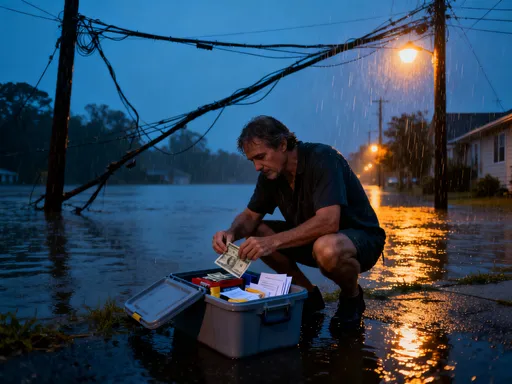
After the flood, the first thing I rebuilt was my emergency fund — but not the way most people do. I didn’t just set a savings goal and forget it. Instead, I designed a fund that could function when normal systems failed. The key insight was this: an emergency fund isn’t just about how much you save — it’s about how quickly and reliably you can access it when disaster strikes. I shifted from a single savings pool to a three-tier system, each layer serving a specific purpose during a crisis. The first tier is immediate cash — physical bills kept at home in a secure, waterproof container. This isn’t meant to last months; it’s for the first 72 hours, when ATMs are down and stores may only accept cash. I keep enough to cover food, fuel, and small essentials for my household. It’s a small amount by long-term standards, but in a blackout, it’s priceless.
The second tier is short-term reserves — money I can access within a few days, even without local banking services. I keep this in a high-yield savings account with a national bank, not a local credit union. Why? Because national banks are more likely to have branches or ATMs in unaffected areas. I also ensure the account allows remote access and transfers, so I can move money if I’m displaced. This tier covers one to two months of essential expenses — rent, utilities, insurance premiums — in case income is interrupted. I treat it as strictly off-limits for non-emergencies. To test its reliability, I do a quarterly access drill: I log in from a different device, transfer a small amount, and confirm it arrives. It sounds excessive, but during the flood, I learned that accounts you haven’t touched in months can have unexpected security blocks or expired credentials.
The third tier is recovery capital — funds set aside for rebuilding after the immediate crisis passes. This includes money for home repairs, replacing damaged belongings, or covering higher living costs if I need temporary housing. I keep this in a diversified mix of liquid assets: a portion in a money market account, another in short-term CDs that can be cashed with minimal penalty, and a small amount in a dedicated brokerage account with low-volatility ETFs. These aren’t high-growth investments, but they’re stable and accessible. The goal isn’t maximum return — it’s dependable access when I need it most. I review this tier annually, adjusting for inflation and changes in living costs. Together, these three layers form a financial safety net that doesn’t depend on a single point of failure. If one system goes down, the others can still function. That redundancy is what makes the fund truly resilient.
Cash Is King (When the Power’s Out): Why Liquidity Matters More Than Returns
One of the most surprising lessons from the flood was how quickly digital money becomes worthless when the grid fails. I had always prided myself on being cashless — using cards, mobile payments, and apps for everything. It was convenient, secure, and efficient. But when the power went out for over a week, that convenience vanished. Stores that stayed open only accepted cash. Gas stations couldn’t process cards. Even aid distributions required physical money for certain supplies. I watched people trade bottled water for cigarettes, barter tools for food — because cash was the only currency that worked. That’s when I realized: in a crisis, **liquidity trumps return every time**. A high-yield savings account earning 4% is useless if you can’t withdraw from it. A stock portfolio worth thousands means nothing if you can’t sell or transfer it.
Now, I maintain a small but strategic stash of physical cash at home. It’s not hidden under a mattress — it’s stored in a fireproof, waterproof safe, along with emergency documents. I keep a mix of denominations: mostly $20 bills for flexibility, with some $5s and $10s for smaller purchases. The total amount covers about one week of essential spending for my household. I rotate the bills every six months to keep them in good condition and avoid mold or deterioration. I also have a clear withdrawal strategy: if a major storm is forecasted, I pull out a portion of my emergency cash in advance, so I’m not caught scrambling at the last minute. This isn’t about distrust in the banking system — it’s about recognizing that infrastructure can fail, and having a low-tech backup is a form of financial insurance.
Some might argue that keeping cash at home is risky — what if it’s stolen or lost? That’s a valid concern, which is why security matters. My safe is bolted to the floor, and only immediate family knows the combination. I don’t advertise that I keep cash, and I don’t keep large amounts. The goal isn’t to replace banking — it’s to supplement it with a failsafe. I also pair this with a plan for accessing more funds if needed. For example, I have a backup debit card from a different bank, stored in a separate location. I’ve pre-authorized a trusted relative to help manage my accounts if I’m unreachable. These layers of redundancy ensure that even if one option fails, others remain. In the end, the lesson is simple: in a crisis, money you can touch is more valuable than money you can see on a screen. Returns matter in normal times — but in a disaster, access is everything.
Document Armor: Protecting IDs, Insurance, and Records from Nature’s Wrath
During the flood, one of my biggest frustrations wasn’t just losing money — it was losing proof of it. My driver’s license, Social Security card, bank statements, and insurance policies were all damaged or destroyed. Replacing them took weeks, slowed by bureaucracy and missing information. I had to provide proof of address, but my utility bills were gone. I needed to file an insurance claim, but I couldn’t find the policy number. The process was exhausting, and it delayed my recovery by months. That experience taught me a crucial lesson: your financial identity is as important as your money. If you can’t prove who you are or what you own, you’re effectively powerless in a crisis. From that point on, I built what I call my “document armor” — a dual system of digital and physical backups designed to survive disaster.
For digital protection, I created an encrypted cloud storage folder dedicated to financial documents. It includes scanned copies of my passport, birth certificate, property deed, mortgage agreement, insurance policies, and bank account details. I use a reputable provider with end-to-end encryption and two-factor authentication. But I don’t rely solely on cloud access — I also keep a local copy on an encrypted USB drive stored in a different location, like a relative’s home or a safe deposit box. This ensures I can access my records even if the internet is down. I update the folder quarterly, removing outdated documents and adding new ones. I also share access with my spouse through a secure password manager, so both of us can act if one is unavailable. This digital layer gives me speed and convenience when systems are working.
The physical layer is equally important. I keep printed copies of all critical documents in a fireproof, waterproof safe at home. These aren’t just loose papers — they’re organized in labeled folders, sealed in plastic sleeves to prevent moisture damage. I include not only personal IDs but also emergency contacts, a list of account numbers, and instructions for accessing online accounts. I review and refresh these papers twice a year, ensuring nothing is expired. I also keep a smaller “go-bag” version — a waterproof envelope with the most essential documents — ready to grab if I need to evacuate quickly. This dual approach — digital for recovery, physical for immediate access — ensures I’m never left without proof of my financial life. It’s not glamorous, but it’s one of the most effective safeguards I’ve built.
Insurance That Actually Pays Off — Not Just a Paper Promise
Before the flood, I thought I was insured. I had homeowner’s coverage, health insurance, and even a small life policy. But when I filed my claim, I learned a hard truth: not all insurance is created equal. My policy had a flood exclusion clause — a detail buried in the fine print that I’d never noticed. That meant the damage to my basement, walls, and stored belongings wasn’t covered. I was responsible for thousands in repairs. The experience was a wake-up call: having insurance isn’t enough. It has to be the right kind — one that actually pays when you need it most. Since then, I’ve overhauled my entire insurance strategy, focusing on three principles: clarity, coverage, and documentation. I now read every policy document thoroughly, ask questions about exclusions, and ensure I understand exactly what’s protected and what’s not.
I started by adding flood insurance through a federal program, since standard homeowner’s policies rarely cover water damage from natural events. I also reviewed my health insurance to confirm it includes emergency care and evacuation costs — something many plans limit. For income protection, I increased my disability coverage to ensure I’d still receive a portion of my salary if I couldn’t work due to injury or displacement. I also made sure all policies allow for remote claims filing and fast processing, so I’m not stuck waiting weeks for assistance. But the biggest change was in how I document my belongings. Before, I had no inventory. Now, I keep a detailed record of high-value items — electronics, furniture, jewelry — with photos, receipts, and estimated values stored in my encrypted cloud folder. I update this list annually, or whenever I make a major purchase.
This documentation has already paid off. When a storm damaged my roof last year, I filed a claim within hours, attaching photos and my inventory list. The insurer processed it in three days — much faster than my flood claim had been. I’ve also learned to communicate proactively with my providers. I keep a list of emergency contact numbers, and I’ve established relationships with claims adjusters in advance. I know that in a disaster, thousands will file at once — so being prepared helps me stand out. Insurance isn’t a magic fix, but with the right policies and records, it becomes a reliable safety net. It’s no longer a paper promise — it’s a practical tool I can count on.
Income Resilience: Keeping the Money Flowing When Work Stops
One of the most stressful parts of the flood wasn’t the property damage — it was the loss of income. My workplace closed for over a month due to structural damage and power outages. With no remote work option, I wasn’t paid during that time. That gap in earnings threatened my ability to cover mortgage, utilities, and other fixed costs. I realized then that job security doesn’t guarantee income security. If your livelihood depends on a physical location, a single event can cut it off. Since then, I’ve built multiple layers of income resilience to ensure I’m never fully dependent on one source. The goal isn’t to replace my main job — it’s to create backup options that can sustain me during disruptions.
The first step was preparing for remote work. I invested in a portable laptop, a mobile hotspot, and cloud-based tools that let me access work files from anywhere. I also negotiated with my employer in advance, getting written confirmation that I can work remotely during emergencies. This wasn’t just a favor — it was a business continuity agreement that protects both of us. If I can keep working, the company retains productivity; if I keep earning, I maintain financial stability. For added security, I’ve developed freelance skills — writing, consulting, and virtual assistance — that I can offer independently. I keep a portfolio ready and maintain relationships with clients who might need help on short notice. These aren’t full-time incomes, but they can cover essentials if my primary job pauses.
I’ve also explored passive income streams that don’t rely on daily effort or local infrastructure. This includes dividend-paying stocks, a small rental property managed through a third party, and digital products I’ve created — like e-books and templates — that generate sales automatically. These sources don’t replace a salary, but they provide a financial cushion. I track them separately in my budget, treating them as “crisis income” — money that stays untouched unless needed. I also maintain an emergency line of credit with a low-interest rate, which I can draw on if cash flow stops. It’s not debt I want to use, but it’s better than missing payments. Together, these strategies form a diversified income portfolio that reduces my vulnerability to any single point of failure. In a world where disasters can strike without warning, income resilience isn’t optional — it’s essential.
Rebuilding Smarter: Turning Financial Recovery into Long-Term Strength
The flood was devastating, but it also became a catalyst for lasting change. In the months that followed, I didn’t just restore what was lost — I rebuilt with greater foresight. I reassessed my risk exposure, asking hard questions: Was I living in a high-risk area? Did my home have adequate protection? Was my financial plan truly resilient? The answers led to concrete actions: I upgraded my home’s drainage system, installed storm shutters, and moved critical electronics to higher ground. I also diversified my banking — opening accounts with institutions in different regions, so a local disaster wouldn’t freeze all my assets. I adjusted my budget to prioritize emergency preparedness, allocating a monthly amount specifically for resilience upgrades.
Perhaps the most important shift was in my mindset. I moved from reactive to proactive — from hoping disaster wouldn’t happen to preparing for when it might. I now conduct annual financial stress tests, simulating scenarios like job loss, medical emergencies, or natural disasters. I review my emergency fund, insurance, and access plans every six months. I involve my family in these discussions, so everyone knows the plan and can act if needed. I’ve also started mentoring others in my community, sharing what I’ve learned about financial resilience. It’s not about fear — it’s about empowerment. The peace of mind that comes from being prepared is worth more than any return on investment.
Today, I’m not just financially stable — I’m financially resilient. I know that no plan is perfect, and no system is foolproof. But I’ve built layers of protection that give me a fighting chance when the unexpected happens. The disaster didn’t destroy my finances — it strengthened them. And if you take one lesson from my experience, let it be this: preparation isn’t paranoia. It’s responsibility. By taking practical, thoughtful steps now, you can protect your money, your family, and your future — no matter what storms lie ahead.